If you’re like most fishermen and
women, you’ve probably always dreamed about taking a fishing trip to Alaska.
You imagine yourself wading through the clear mountain streams chasing rainbows
or taking a charter trip to catch giant barn door sized halibut. Maybe you
would prefer casting into giant schools of bright red sockeye salmon or
floating a river in pursuit of the next world record king salmon. Originally I
assumed a trip like this would involve a remote location that was a huge
investment in time, and well, let’s not forget about money. However I found an
Alaskan vacation was easier than I ever imagined. You can actually do all of
these things with a flight to Anchorage
and a 52 mile drive to Alaska’s Kenai
Peninsula.
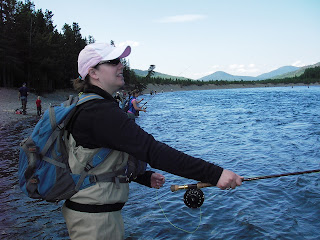
In the heart of Alaska’s
Kenai Peninsula lies the famed Kenai
River. The Kenai
River is home to many world class
fishing opportunities. The sockeye or “red” salmon enter the Kenai
River in two runs starting in mid
May and continuing through August. The sockeye salmon fishery is the most
popular fishery in Alaska because
it is easily accessible to any angler wearing waders. The rainbow trout of the Kenai
River are residents and can be
pursued from April to October throughout the upper and middle stretches of
river. These fish are known to reach magnum proportions of 30” plus. The Kenai
was also home to nine of the top ten largest king salmon ever hooked. Anglers
flock to the Kenai every summer in hopes of beating the current world record of
97 pounds 4 ounces.

The Russian
River is located in the town of Cooper
Landing and is one of the first towns you will
encounter on your pilgrimage. The stretch from the Kenai and Russian
River confluence up to the Russian
River falls offers a great area to
wade and fish. A ferry brings anglers across the Kenai where they can choose to
fish the confluence or travel upstream on the Russian. It is here that the term
combat fishing was born. Anglers from all over the world flock to the area to
intercept migrating sockeye salmon. While the area is not a destination for
solitude, it does provide for some fantastic fishing. Pods of sockeye salmon
can even be seen making their way into the Russian. Where you find big numbers
of salmon you will also find bears. Last year my wife and I had a sow brown
bear and cubs pop out right behind us while fishing the Russian. We quickly
surrendered our hot spot to mama and the cubs, and were left alone downstream
the rest of the afternoon. I would highly recommend a can of bear spray in this
area.

The area downstream from the Russian
River confluence to Skilak
Lake is known as the Kenai River
National Wildlife Refuge. This stretch provides some of the best fishing for
resident rainbow trout and dolly varden. Anglers have a few areas that can be
accessed from the highway to wade and fish. Many guides also offer drift boat
trips through this section. The section just above Skilak
Lake is known as the canyon. This
section takes you through the most beautiful remote section of the river. It is
home to many white water runs and also those magnum sized rainbows that you’ve
been dreaming about.

A short drive will take you to the
town of Soldotna which offers
restaurants, laundry facilities, tackle shops and all the other conveniences of
the lower 48. The city also offers many areas to access the middle Kenai
River. After learning a simple
bottom bouncing technique, you will be ready to hook your first sockeye salmon.
Remember to use a heavy diameter line because these fish know how to use the swift
current of the Kenai to their advantage. Pound for pound these fish fight
harder than any fish this guy has ever hooked. If you go too light the first
drag burning run from one of these rockets may leave you standing there with a
dumb look on your face. Several public campgrounds in town offer camping safely
outside of bear country. Soldotna is also the place you will likely meet your captain
if you plan on taking a king salmon charter.

The coastal
towns of Seward and Homer are the most popular ports for halibut charters. Some
charters will also offer multi species trips which include ling cod, rockfish
and salt water salmon. On your voyage out to the halibut grounds you will pass
glaciers, see bald eagles and may catch a glimpse of sea otters, puffins and even
whales.
Alaska
has many regulations in place to protect this phenomenal fishery. Regulations
exist that limit hook size, use of bait, and where fish can be cleaned just to
name a few. To prevent the spread of invasive species, Alaska
has a ban of felt sole wading boots that’s new for the 2012 season. I wear
Korkers wading boots that have an interchangeable sole and allow me to easily switch
my felt soles to a rubber sole for Alaska.
I would suggest you grab a copy of the regulations upon arrival.
Hopefully you will decide that your
dream Alaskan vacation is more achievable than you ever imagined. I can smell
the halibut fillets on the grill already!
 |
Map Courtesy of: Kenai Peninsula Bed and Breakfast Association:
http://www.kenaipeninsulabba.com |
By: Garett Svir
Photography By: Kim Svir


