Popular Posts
-
Well the secrets are out! I've been working on some diagrams for the Water Gremlin Sinkerizer. These are the rigging methods that we com...
Showing posts with label big bluegills. Show all posts
Tuesday, December 2, 2014
Monday, October 20, 2014
Chasing Dogs Riding Bicycles
Chasing Dogs Riding
Bicycles
I woke up in a panic. I’ve had
nightmares before but this one was different. You see no one was
chasing me, I wasn’t falling from a high place and I wasn’t
behind the wheel seeing headlights. I had just knocked off a bluegill
at the bottom of the hole that I suspected was an honest two pounds.
In a world where most anglers rarely find a one pound bluegill, this
was a nightmare of epic proportions. Waking up safe and sound on top
of the covers and coming to the realization that I had never hooked
this fish was a huge relief. Fish of this caliber, while extremely
rare, do exist beyond my unusual dreams. Legendary bluegill hunter,
Bruce Condello, and his group of bluegill aficionado friends, had
shirts made of dogs riding bicycles because honest three pound
bluegills are about as common. Bruce specifically has five bluegills
to his credit that went an honest three pounds in his home state of
Nebraska. If we were to start a fantasy bluegill fishing league,
another of my top draft picks would have to be Clayton Davis of North
Dakota. Davis recently captured a 12” two pound specimen late ice
this past winter and has many other large fish to his credit. While
scarfing down a gas station burrito on the way home from chasing
bluegills all day may have led me to strange dreams of massive pie
plates, I wanted more. I wanted to know what it really takes to land
a personal best this ice season. How do these anglers select lakes
that have the capabilities to produce this caliber of bluegill? Does
it relate to the genetics of the fish or is it simply a matter of
finding over fed obese populations? What voodoo mind tricks are
involved in finding dogs riding bicycles?
North Dakota angler, Clayton Davis,
has really made a name for himself the past few seasons with his
social media bluegill pictures. Living in an area where walleyes and
perch reign as king, he has found populations of giant untapped
bluegills. Davis has a system of finding lakes that have trophy
potential and it starts with looking into state stocking reports. He
explained to me that you not only need to check available data on
bluegill populations but also try to locate lakes with large pike.
Lakes that boast populations of large pike typically have a balanced
population of bluegills. Balanced populations have the potential to
grow large fish versus lakes that have over abundant populations of
fish that will end up stunted. Lakes will only support so many inches
of fish so these large predators are needed to keep the population in
check and the size good.
After selecting lakes with high caliber
potential, Davis begins his search. He notes that pencil reeds are
paramount when searching out a new lake and big bluegills are usually
in close proximity. He will start shallow and work his way through
the mid depth weed flats out into the basin. During late ice, which
he considers the best time to chase pie plates, he often finds giants
in as shallow as three feet of water. Using the weed fishing mode on
his Vexilar FLX-28 allows Davis to see his jig and approaching fish
in this heavy cover. He explains that the weed mode drowns out
clutter from the weeds and has been instrumental in his success. When
he begins to find medium sized fish, he will often drill a large
concentration of holes to circle that immediate area. This allows him
to dissect the weed beds and find the best vantage points. Places for
fish to ambush prey, while also providing cover from large pike, are
going to hold the largest gills. He described that a sort of pecking
order exists in the world of bluegills and big fish will take these
prime locations and push smaller fish out into the fringe areas.
The founding father of modern ice
fishing, Mr. Dave Genz, has been chasing high caliber bluegills since
childhood. He likes to look for big bluegills in lakes that will
sometimes experience a partial winter kill. Yes, you read that
correct. This is a theory that has worked well for Genz over the
years. It goes back to a lake only being able to support so many
inches of fish. A partial winter kill will thin the lake enough for
the remaining fish to thrive and grow large. In order for this to
happen at least part of the lake has to be shallow limiting oxygen
after the weeds die off mid-winter. This is one of the few events
that can reverse the effects of lakes that house over abundant
stunted populations.
Pursuing pie plate sized bluegills is
my passion. I have spent countless hours milling over maps and lake
data looking for the next lake that may produce a fish over 11”. I
have found a few factors that I like to look for when trying new
waters. The first would be current. Lakes that are connected by
rivers and have some current running through them for whatever reason
are always top producers. While I have not completely figured out the
correlation, give this trick a try and I promise you won’t be
disappointed. The second thing I like to look for is the presence of
shrimp. Amphipods or shrimp are high calorie meals for bluegills and
can bulk up fish faster than other invertebrates. If obese gills are
on the docket this winter, find the lakes with shrimp and current.
The other piece of the puzzle is
genetics. Male bluegills pass on genetics to their offspring. Just as
my children will never be as tall as Shaqueille O’Neil’s
children, 7” male gills do not have the proper genetics to produce
11” bulls. Bruce Condello, owner of the website bigbluegill.com,
has his own strain of bluegill called Condello gills. He has created
this strain on a private pond that he manages by netting the pond
every year in October. By taking out all bluegills except the largest
1/10 of 1 %, he has created a sort of super strain that can grow to
10” in sixteen months. One thing this tells us is that when anglers
sort to keep the largest bluegills as table fare, we are genetically
making our bluegill populations smaller. It is important that the
bluegill aficionado recognizes this and opts to release big bulls and
instead harvest more abundant smaller fish.
When hunting down
giant Nebraska bluegills on public water, Bruce likes to look for
lakes that house large concentrations of juvenile largemouth bass. It
goes back to the theory of lakes only being able to support so many
inches of fish. According to Condello, largemouth bass in the 11”
range are eating machines and keep populations balanced. This allows
remaining bluegills enough food to pack on pounds. He also looks for
lakes that have, what he describes as, high water quality. Lakes that
have submergent vegetation, clear water and low nutrient loads are
his top choices. Clear lakes have better sunlight penetration for
weed growth. These lakes with rooted vegetation produce oxygen from
the bottom up so fish don’t get stressed and can continue to feed
even throughout difficult periods of the year. Lakes that are highly
nutrient laden lack the sunlight penetration to grow deep rooted
vegetation so oxygen comes from algae and can dip to low levels. He
also noted the importance of appropriate sized invertebrates for the
fish to feed on in the early stages. If another species strips out
the 1 mm sized invertebrates, young bluegills must become risk
takers, leaving the protection of the weeds in search of an open
water food source. This often leads to them being eaten by bass. He
believes that having enough of the correct sized invertebrates is
more important than the amount of available spawning habitat in a
particular lake. Avoiding lakes with small stunted populations is
paramount. Lakes with an overabundance of weeds will foster small
fish and stunted populations. Ideal waters are comprised of less than
10% weeds. Heavily weeded lakes will protect more bluegills from
predation than the food source can support and the population will
stunt. Condello’s best advice for an angler looking to ice a
personal best this winter is to first, find lakes that have big
bluegills and second, sort through a lot of fish. Visualize the items
that a large bluegill may eat that a medium sized bluegill cannot.
Big bluegills have bigger mouths than their medium sized counter
parts so bigger baits are often necessary. Pay attention to the depth
that the bigger fish are using. Don’t be afraid to leave medium
sized fish to search out giants.
The ice season is finally upon us and
with it brings an opportunity to spend time with friends and family
on the hard water again. Whether you or I ice a personal best or not
this season, the charm is what is elusive but attainable, a perpetual
series of occasions for hope (John Buchan). I guess I just love
chasing dogs riding bicycles.
The author Garett Svir
is the owner of Slab Seeker Guide Service
http://www.slabseekerfishing.com
and specializes in chasing big central Minnesota bluegills.
Tuesday, January 7, 2014
Overshadowed Bluegills- Slab Seeker Guide Service
Overshadowed
Bluegills
By: Garett Svir
Photos: Kim Svir
Fall is a time of plenty for the
outdoor enthusiast. While many pass the days in tree stands waiting for a wily
buck to slip up, others wait in fields for fall migrants to pass overhead.
Serious walleye anglers are experiencing their best big fish bite of the year
over sharp breaks and deep water. Days are devoted to spending quality time
with family over a warm bowl of chili while cheering on a favorite team.
Families make pilgrimages north to view fall colors or hunt grouse. The fall
wish list can get pretty long but for serious panfish aficionados, the fall
signals a time of large concentrations of hungry panfish in predictable
patterns. Fall brings an opportunity to target some of the largest specimens in
a particular body of water. You’ll find that locating and catching bluegills in
the fall is not much different than at first ice.
As late summer rolls around and
water temperatures get high, big bluegills often evacuate shallow water leaving
behind their smaller counterparts. These fish typically stay suspended on the
thermocline until fall turnover. Once the water turns over, some of these large
fish will return to the weeds while others stay suspended over deep water. Here
they generally stay together in small schools of 10-20 fish. These sight
feeders are always moving and grazing on anything that catches their eye. Bluegill’s
food sources include such things as algae, aquatic vegetation, zooplankton,
insect larvae, insects, fish eggs and occasionally minnows. In the fall,
packing on pounds for leaner times becomes a priority. Some studies show fish
eating up to 35% of their body weight weekly. As water temperatures begin to
drop, fish tend to stay more active during daytime hours, not limiting anglers
to first and last light.
I recently had the opportunity to
spend some time on one of my favorite big bluegill haunts, by none other than
legendary angler Dave Genz. When I picked him up at the dock, he was armed with
his trusted Vexilar FLX-28, a pocket full of euro larvae and an assortment of
his favorite ice jigs. As we made our way out into the basin, familiar lines
began to show up on our flashers, reminiscent of being on the ice. Dave knew
how to interpret these lines very well as it only took moments before he was
tussling with his first bluegill.
Genz suggested anchoring in both
the front and back of the boat to keep presentations vertical and visible on
electronics. Too much boat sway would bring jigs outside the view of our
electronics and leave us fishing blind. He showed me a new tungsten jig that
will be available later this fall, called the Dropper. The heavy tungsten
allowed him to use a small profile jig that stayed vertical and dropped quickly
to feeding fish.
HSM Pro Staffer, Mike Raetz, also
professes to catch his largest bluegills during fall, suspended over deep
water. Mike often uses his ice rods to jig vertically over the side of the
boat. He likes how shorter rods keep his jig inside the cone angle and visible
on his Vexilar. “One big split shot, about a foot above my jig, is all I need
to maintain depth control,” says Raetz. Mike employs a single anchor off the
front of the boat once fish are located. This keeps him swaying and working
different fish, picking off the most aggressive ones before moving to his next
location.
Fall is a busy time indeed with
hunting and family but if you do find some spare time don’t forget the often
overshadowed bluegills. Finding large concentrations of big bluegills in predictable
locations is a great reason to enjoy some of the last open water fishing of the
year. Trust me when I say… you’ll be glad you did.
HSM Outdoors is a group of anglers from around the United
States and Canada dedicated to
making you more successful in the field and on the water. For more information
on fall bluegills visit http://www.hsmoutdoors.com.
Saturday, December 22, 2012
Bluegills Secrets Reveled
By: Garett Svir
Photography: Kim Svir
It’s 5 am and
you’re up brewing coffee. Lake map in hand you make last minute decisions
before heading out to load gear. Mother Nature’s icy grip has taken hold as you
head out to temperatures well below freezing. Armed with an assortment of jigs
and plastics you make your way out into the frozen tundra. Big bluegills can do
crazy things to a person. They can consume your thoughts. If this sounds like a
normal weekend to you, then you just may have what it takes to ice a bluegill
over 10” this winter. Big bluegills can be tough customers. The best eye sight
in the business coupled with an uncanny way of tasting a bait before committing
can make them very difficult at times. When it comes to winter bluegills it
seems like 10 % of anglers are hooking 90% of the fish. So what are their
secrets? I decided to pick the brains of two of the best in the business… Dave
Genz and Dave Young.
Dave Genz is
considered the founding father of modern ice fishing. The winter fishing system
that he developed has forever changed the way that anglers ice fish. Instead of
dragging a small house out onto the ice to stay comfortable, we can now stay
out of the elements and remain mobile with the advent of his Fish Trap. His
inventions were born out of necessity on his quest to catch more and bigger bluegills.
Genz fishes more by feel than by
line watching. It is something that he refers to as cadence. “It’s just like
fishing with a crank bait, you want the fish to feel it in their lateral line”
says Genz. He has learned to feel his
jig pounding in the water. When he can no longer feel the jig pounding he sets
the hook knowing that a fish has inhaled his offering. He prefers clear line in
2 pound test over the high visibility stuff. Genz expressed that sometimes a
person has to cut the bluegills a little slack. He informed me that when the
bite gets tough and you find yourself missing fish to briefly drop the rod tip
and immediately set the hook. This is something that he learned by years of
bobber fishing. “Sometimes you have to let them take it” explains Genz. When he
started using Vexilar 25 years ago he used to write articles about how to catch
sniffers, those picky fish that would not bite. He wrote about finesse
presentations and dropper rigs. He has now changed his school of thought
regarding this and opts to drill more holes and search out active bitters. “I
want to make that first drop down a new hole” he explains. He firmly believes
that those first drops down a new hole produce his biggest bluegills of the
season. “At the end of the day that strategy will produce more fish” says Genz.
You want to have the mindset that a small percentage of the fish in a
particular body of water are bitters, and that it’s the anglers job to search
out those bitters. When asked about structure he expressed that his favorite
spots for bluegills are deep weed edges. He prefers to search these areas over
deep basins because he can usually find less pressured fish. “Deep basin areas
can be good early before the crowd develops” he explains. Once the crowds hit
an area, it is beneficial to strike off to find less pressured fish.
You may remember Dave Young from
the television reality series Ice Men that aired on the Versus Channel. Young
is considered an authority on tight line fishing for finicky bluegills.
Spending 35 years on the hard water, Young has also seen it all. He knows how
to get it done in tough conditions. Young has spent countless hours showing
others the art of tight lining. When he is teaching someone to tight line, he
does not let his students use a flasher. He believes that this can be a
distraction for anglers new to this style of fishing. “An angler must first
learn to watch their line and detect subtle strikes” he explains. This also
forces new anglers to fish the entire water column and they will often catch
fish that come in quickly from outside the cone angle of the flasher. The
amount of concentration that Young employs is unmatched. He jokes of bringing
Advil with him on tournament day because he gets headaches from concentrating
too much on his line. If you watch Young with a jigging rod it almost looks
like he is jigging in a circle. When questioned Young stated, “A jigging style
is like a finger print and is unique to every angler.” You can still believe
that I am going to add circle jigging to my bag of tricks this winter. “I am
watching my line as far down into the water as I can see it” tells Young. This
allows him to see even the slightest irregularities in his jigging sequence.
He’s watching the small kinks in his line that appear while jigging. If he
notices the kinks in his line straighten out, he sets the hook. He is also
looking for his line to go slack. This alerts him that a fish has grabbed his
bait and swam up in the water column. His line of choice is 2 pound test Stren
in high visibility yellow. He likes the way yellow shows up against snow and
ice. He developed an ice rod for HT and pairs it with a small plastic reel
called a Schoolie. On tournament day, 28 rigged rods will make it onto the ice.
This allows Young to switch presentations quickly without taking the time to
re-tie. Throughout the interview he stressed the importance of versatility.
“Some times I work fish from the top down and other times I work them from the
bottom up” he explained.
The play book is open. The best in
the business have revealed tactics to help you ice more bluegills this winter.
I hope that some of those bluegills make it back down the hole. I recently
learned of an organization called Recycled Fish. They are encouraging anglers
to release their largest bluegills to keep big fish genetics in our favorite
lakes and ensure big fish in the future.
Become more than a sportsman, become a steward of our lakes and take the
sportsman’s stewardship pledge at http://www.recycledfish.org.
Friday, May 18, 2012
Spring Sunfish
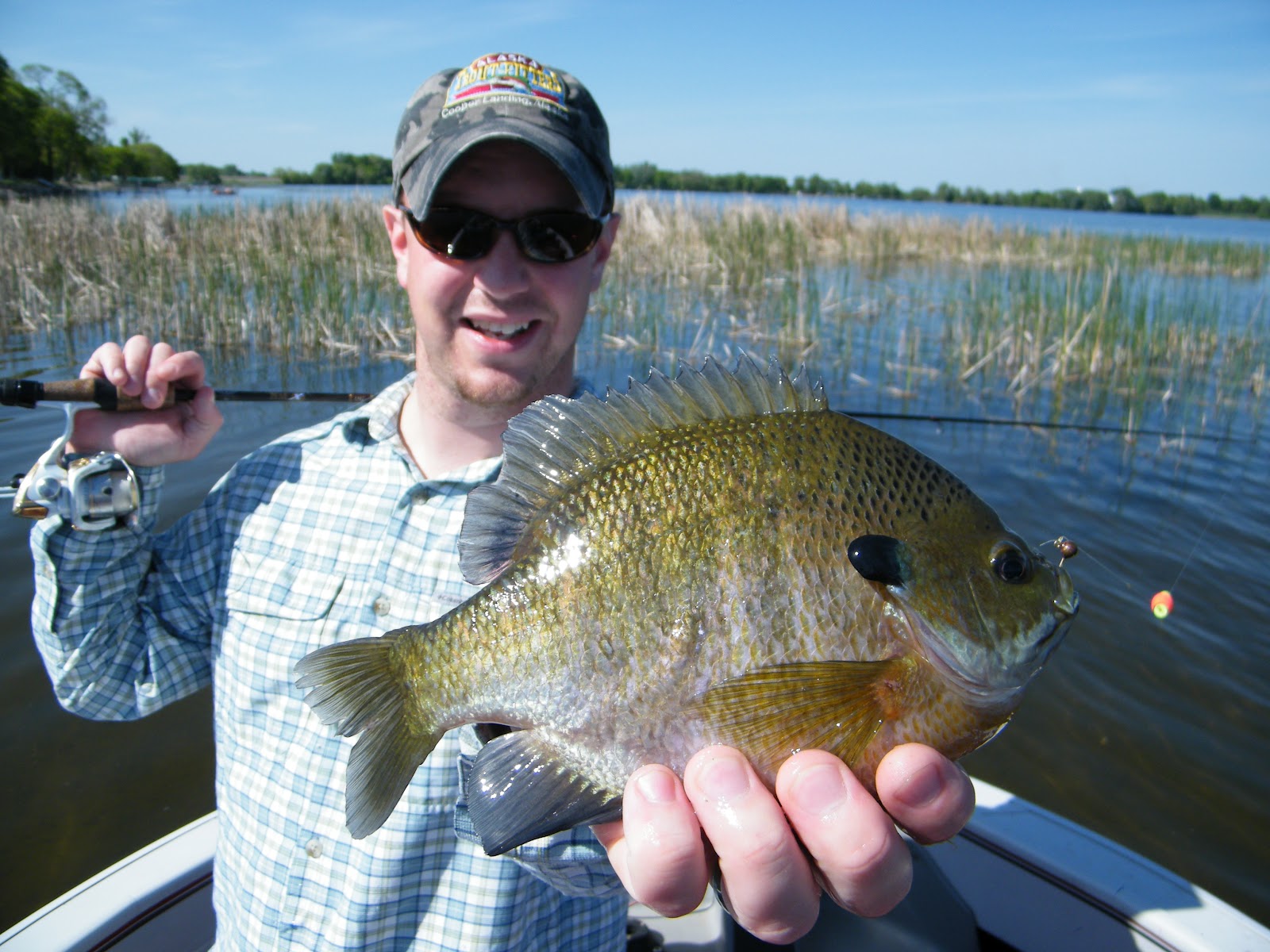
Great day on the water fishing bluegills! Caught one 10 1/2 inches, most 8-9 inches. Huge fish, awesome photos, great company!
All images are property of Slab Seeker Fishing.
If you are interested in stock images of fishing related content, please contact me at slabseekerfishing@hotmail.com
Kim
Monday, January 30, 2012
Finding Big Panfish
I spent my night doing some research on the Department of Natural Resources Lake Finder site. If your a panfish aficionado like myself this site should be on your favorites list. Not to let out all the secrets but this site opens the book on all surveys for your favorite area lakes. It makes it easy to find lakes that have a higher density of large panfish. It also shows the number of fish that were caught in the survey, and the exact amount in the different size ranges. I live in Minnesota where the DNR also offers a mobile app. I'm sure most states have this available in some capacity. The one problem that I find is some of the test netting and electro-fishing was done many years ago, so the information is not always current. It does however still give you a starting point. So to test the site, I pulled up one of my favorite big bluegill lakes here in Central Minnesota. Reading thru the survey information I found that no bluegills were caught in this body of water by the DNR. This seemed strange to me so I made a call to our local fisheries office. The technician that answered the phone knew exactly which body of water I was referring to. He informed me that I was not crazy and big bluegills do exist in this body of water. He informed me that they had caught them in a different study where the results were not published. I also asked him what variable he believed was the most important to finding lakes with big bluegills in the area. I thought maybe freshwater shrimp as a food source, or current to aide in spawning. He informed me that a smaller population was key. If too much competition exists for food all the fish stay small and stunted. We also talked about the importance of letting the bigger males go. These big males will protect their spawning nests and not allow small fish to spawn, passing on the big fish genetics. He also informed me of a few lakes in the area where test studies uncovered huge crappies.
My personal interest in fishing relates to the chase. Sometimes for me the act of hunting down big fish is much more satisfying than actually catching those fish. This is why I have no interest in driving out onto a lake and setting up in the middle of the community hot-spot. It is much more rewarding to strike out.
The last thing I believe in doing is trying to find a good map of the lake. Even at around a 150 acres, I am not going to be able to "drill out" the entire lake. I need something to give me some starting points. I encourage you to strike out from the pack this winter, and find some big panfish. You might just be rewarded. GT4YSBK72VHB
Tags: "fishing" "bluegills" "crappies" "Minnesota fishing" "finding big bluegills" "1slabseeker""Central Minnesota Fishing Report" "big bluegill" "lakefinder" "catching big bluegills"
My personal interest in fishing relates to the chase. Sometimes for me the act of hunting down big fish is much more satisfying than actually catching those fish. This is why I have no interest in driving out onto a lake and setting up in the middle of the community hot-spot. It is much more rewarding to strike out.
The last thing I believe in doing is trying to find a good map of the lake. Even at around a 150 acres, I am not going to be able to "drill out" the entire lake. I need something to give me some starting points. I encourage you to strike out from the pack this winter, and find some big panfish. You might just be rewarded. GT4YSBK72VHB
Tags: "fishing" "bluegills" "crappies" "Minnesota fishing" "finding big bluegills" "1slabseeker""Central Minnesota Fishing Report" "big bluegill" "lakefinder" "catching big bluegills"
Subscribe to:
Posts (Atom)