Popular Posts

Friday, May 18, 2012

Spring Sunfish


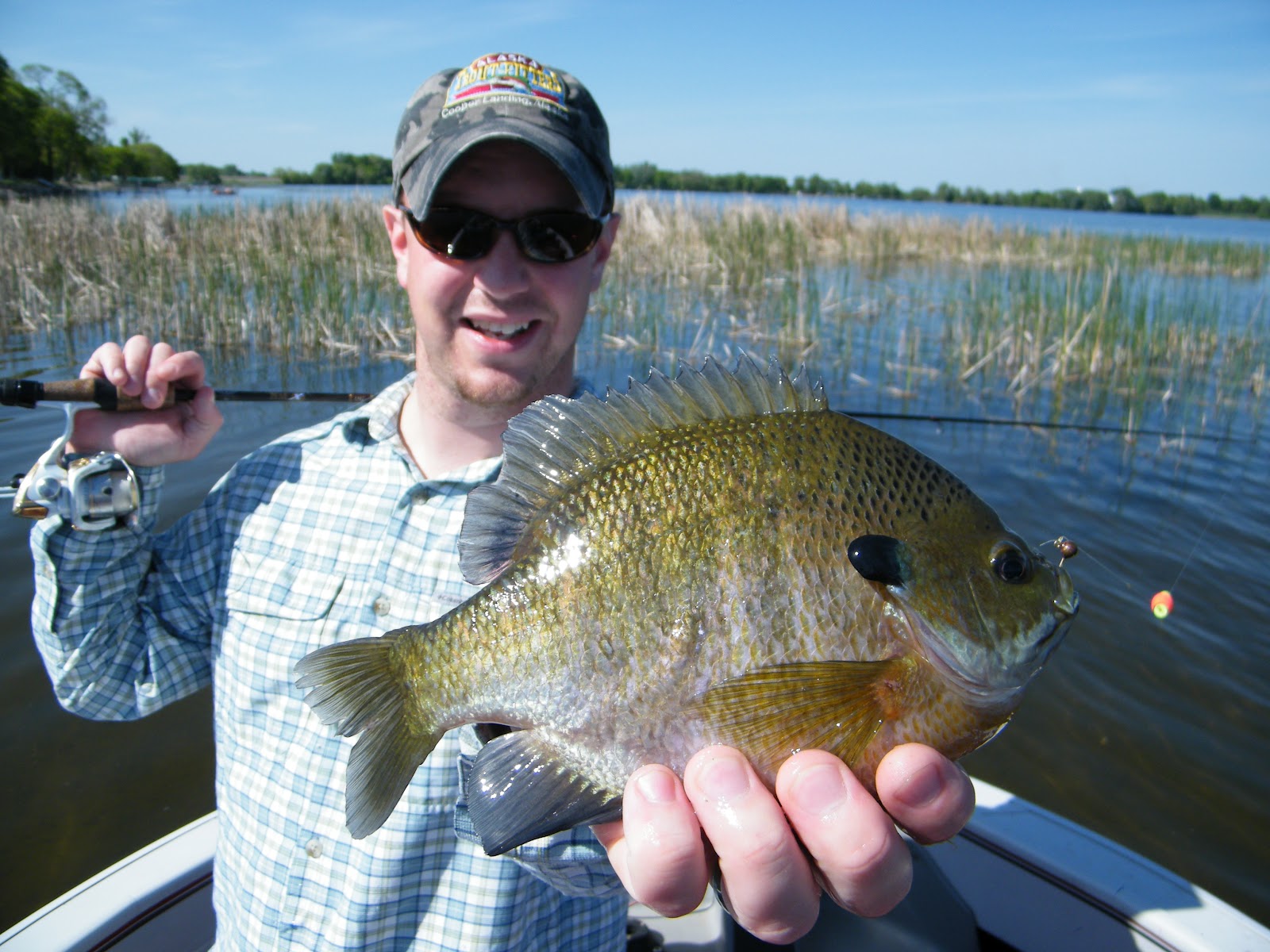
Great day on the water fishing bluegills! Caught one 10 1/2 inches, most 8-9 inches. Huge fish, awesome photos, great company! 


All images are property of Slab Seeker Fishing. 
If you are interested in stock images of fishing related content, please contact me at slabseekerfishing@hotmail.com 
Kim


Monday, May 14, 2012

Fishing Minnesota Trout Lakes


Fishing Minnesota Trout Lakes

June, in Minnesota, is a great time of year to be a fishing enthusiast. In the land of 10,000 lakes we are fortunate enough to have approximately 180 of these lakes managed for stream trout. The stream trout lakes in Minnesota are stocked by the Department of Natural Resources with rainbow trout, brook trout, brown trout and a hybrid of brook and lake trout called splake. The DNR stocks approximately 400,000 rainbow trout, 150,000 splake, 90,000 brook trout and 20,000 brown trout. While a majority of these lakes lie in the northern most part of the state in Lake and Cook counties, trout fishing opportunities lie as far south as Rochester. Not only do these fish raise havoc on light tackle they also make for great table fare.
            Growing up in the Arrowhead Region a majority of our June consisted of fishing the remote trout lakes of northern Minnesota. Many of these lakes you would later lie to your mother about in fear she may name drop at the office water cooler. In the world of inland trout fishing a 17” fish is respected, an 18” fish is coveted, and fish over 20” most people are lying about.  

The remote nature of many trout lakes makes fishing from shore or in a canoe great options. A productive method for shore bound anglers is to inflate night crawlers full of air with sliding ½ ounce Water Gremlin egg sinkers. Slip bobber fishing, casting small spoons, spinners and stick baits all produce results. It pays to be versatile and experiment with presentations. I’ll often bring several rods rigged for different fishing methods. Prolific bug hatches also make the fly rod a viable option on certain evenings. Pay attention to the size and color of bugs that are hatching and try to match the hatch.
Larger lakes will typically have boat ramps and allow for more conveniences to aid in your search. Early in the season fish will be located high in the water column and around shoreline structure. I typically start out trolling spoons or small stick baits. Make sure to let out plenty of line to get lures away from the noise of the motor. These fish have an aggressive nature so don’t be afraid to go fast, even reaching speeds of 2.5 mph. This is a search technique and will help you eliminate unproductive water. Another highly effective technique is to troll a small cowbell rig. Cowbells are a set of spinner blades attached onto a piece of cable. I run a 2’ leader off the cowbells to a #6 hook baited with a half night crawler. I like to pinch my night crawlers in half to leave a big scent trail in the water. The rig produces a lot of flash and vibration. It is meant to mimic a school of bait fish with the added scent of a crawler to seal the deal. These can be fished off a downrigger, or simply weighted down with a Water Gremlin Rubbercor sinker.
 Keep an eye on the depth finder for suspended fish. Once I connect or locate fish on the electronics, I’ll often stop and finesse fish. For this I like to use night crawlers or dough baits like Pautzke’s Fire Bait, fished on slip bobbers. Pautzke’s Fire Bait caters to the instincts of fish that grew up on hatchery pellets consisting of similar ingredients.

As summer progresses the fish will move away from shoreline structure and suspend near the thermocline. This is the layer of water with the greatest temperature change. This layer contains food, adequate oxygen and the preferred temperature of these cold water fish. The thermocline will actually show up on your depth finder as a broken line with heavy shading below it. You will also notice a lot of fish located at this level. This is the time of year when a downrigger really shines. It allows you to fish fast and search out fish at a consistent depth just above this layer of water. Clamp on downriggers can be purchased for a minimal investment and can aid in searching out trout.
A complete list of stocked stream trout lakes is available on the Minnesota Department of Natural Resources Website at: dnr.state.mn.us. It has been said that trout fishing takes you to some of the most beautiful unspoiled places around. I assure you that the remote trout lakes of Northern Minnesota will not disappoint.


Friday, May 11, 2012

Casting River Mouths for Lake Trout and Steelhead

It's getting to be that time of year when I'm seeing fewer and fewer steelhead everyday on Lake Superior's North Shore Tributaries. The days are getting longer and people's attention are turning to warm water species, bbq's and lawn care. Some savy anglers however, are going back to where they began the steelhead season, and fishing river mouths.

 According to trout and salmon guru Gord Ellis, lakers show up when the water pushes 50 degrees. Coaster brook trout as well. I'll add drop back steelhead to the list. Like many other species in post spawn mode, steelhead will drop back out into Lake Superior and gorge themselves on available forage to recover from the spawning cycle. This period can be a short window but can still provide for some angling excitement. 


Gord Ellis recommends jerkbaits like Rapala X-Raps and Husky Jerks in sizes #10 and #12. His favorite colors are clown and silver. He likes the fact that you can work these baits slowly and not get hung up. I've had success with Krocodile spoons from Luhr Jensen in hammered brass/ fire. I replace the treble hook with a 1/0 VMC siwash hook to make it more snag resistant. 

Sometimes you've got to go natural and lakers (much like the author) can't resist a smelt fry. A Water Gremlin Snap Loc Dipsey Swivel Sinker, fished with a 25" leader and a dead smelt is going to produce fish. I simply inject the smelt with a shot of air from my worm blower to float slightly off the bottom. Floating a spawn bag off the bottom will also yield results.


Another secret bait according to Ellis is the bucktail jig. He has the most luck with black, fished with no meat attached. I might have to see if I can get the crew over at Jeff's Jigs to make me some lake trout specials.


It's not over till it's over. Get out and chase some last chance steel faces, lake trout and if your lucky a coaster brook trout. Trust me when I say it's going to be a long time till fall!


Garett Svir
Slab Seeker Fishing


Thursday, May 3, 2012

A Steelhead Odyssey


 Had a truly amazing couple days fishing the rivers!  Huge fish, beautiful scenery, great company!


All images are property of Slab Seeker Fishing. 
If you are interested in stock images of fishing related content, please contact me at slabseekerfishing@hotmail.com 
Kim


Friday, April 20, 2012

Rules Regarding Spawn on Lake Superior

I've spent my spring Kamloops season buying spawn bags from gas stations on the North Shore of Lake Superior at astronomical prices. I recently e-mailed the commissioner of the Minnesota Department of Natural Resources for clarification regarding the use of spawn on the Minnesota side of Lake Superior. He forwarded my e-mail to Matthew Miller from the Lake Superior Marine Unit. I asked all the tough questions and Matt answered them all. Thanks for the info Matt!

  1)      Is it the law that you buy commercially disinfected spawn due to VHS?  Due to the spread of different diseases across the country, and to attempt to prevent their spread in MN, the DNR has adopted rules that require that bait comes from certified disease-free locations or is treated by a licensed processor under DNR permit.  These types of bait then have to be labeled as such to be sold to anglers.  Page 12 of the 2012 Fishing Synopsis contains more information.  You as the angler just need to keep the label from when you purchased the bait.
2)      Is it ok to use spawn from a Kamloops Rainbow caught on Lake Superior for bait on Lake Superior?  No.  Current law prohibits the use of game fish, or any part of a game fish, for bait.  Another statute, specific to Lake Superior, specifically prohibits the taking of fish or parts of a fish for bait from the waters of Lake Superior or the St Louis River, regardless of where they are to be used.  Smelt and cisco have recently been exempted from this regulation.  There are proposals to modify these laws in relation to the use and collection of spawn, but this is where the regulations are at this time.
3)      What about buying it online from sources that claim to be disinfected?  Imported bait is fine, including from online sources, but it also has to come from a certified disease-free source or be treated by a permitted bait processor under DNR permit and labeled as such. 
4)      Can a person disinfect their own for personal use?  No, bait can only be disinfected by the holder of a DNR bait preservation permit.
5)      What does a person need to have on their person to prove their spawn is legal and disinfected?  Just retain the label containing treatment and certification information with you while in the field.  For more information on what information is required on the label, please refer to the statute language in 97C.342, sub 7 on the Revisor’s webpage (www.revisor.leg.state.mn.us). 
Please feel free to contact me at my home office (xxx)xxx-xxxx if you have any more questions or wish clarification on any of these issues.  The recent advance of invasive species and aquatic diseases has led to quite a few changes for all anglers and boaters, but hopefully I was able to help you here.
 Matt
 Matthew S. Miller
Minnesota Conservation Officer
Lake Superior Marine Unit

I then called Mr. Jim Maragos from Centerpin Angling: http://centerpinangling.com, one of the largest spawn bait dealers on the web. Mr.Maragos assured me that all of the fresh spawn they sell is certified vhs free. It all comes from uncontaminated commercial sources. He informed me that he would have his IT team add the certified vhs free information to all sales receipts for Minnesota residents to carry on them while fishing.


Here is a link to the rules for using spawn on the tributaries of Lake Superior in Wisconsin.
http://bruleriversportsmensclub.com/?300604/GLSpawnRules.pdf 


Float Fishing for Steelhead


 A properly rigged and weighted float can deliver your offering at the precise speed of the current, allowing you to achieve a perfect drag free drift.


I like to use floats from Raven Tackle that are specifically designed with steelhead fishing in mind. They attach with surgical tubing and don’t fray your line when you’re making adjustments to depth. They are also rated by a number that lets you know how much split shot they can hold.


 The first order of business is getting down to the bottom where the fish are. You want to space your split shot in such a way that the largest weight is on top to punch through the heavy surface current, and the smallest amount is near your offering. This is known as a shirt button split shot pattern. This allows your offering to float downstream ahead of the float at the same speed as the current. I start out by placing 4 BB split shot under the float and then taper down. I pinch these split shot on by hand to not damage the line when making adjustments to depth.


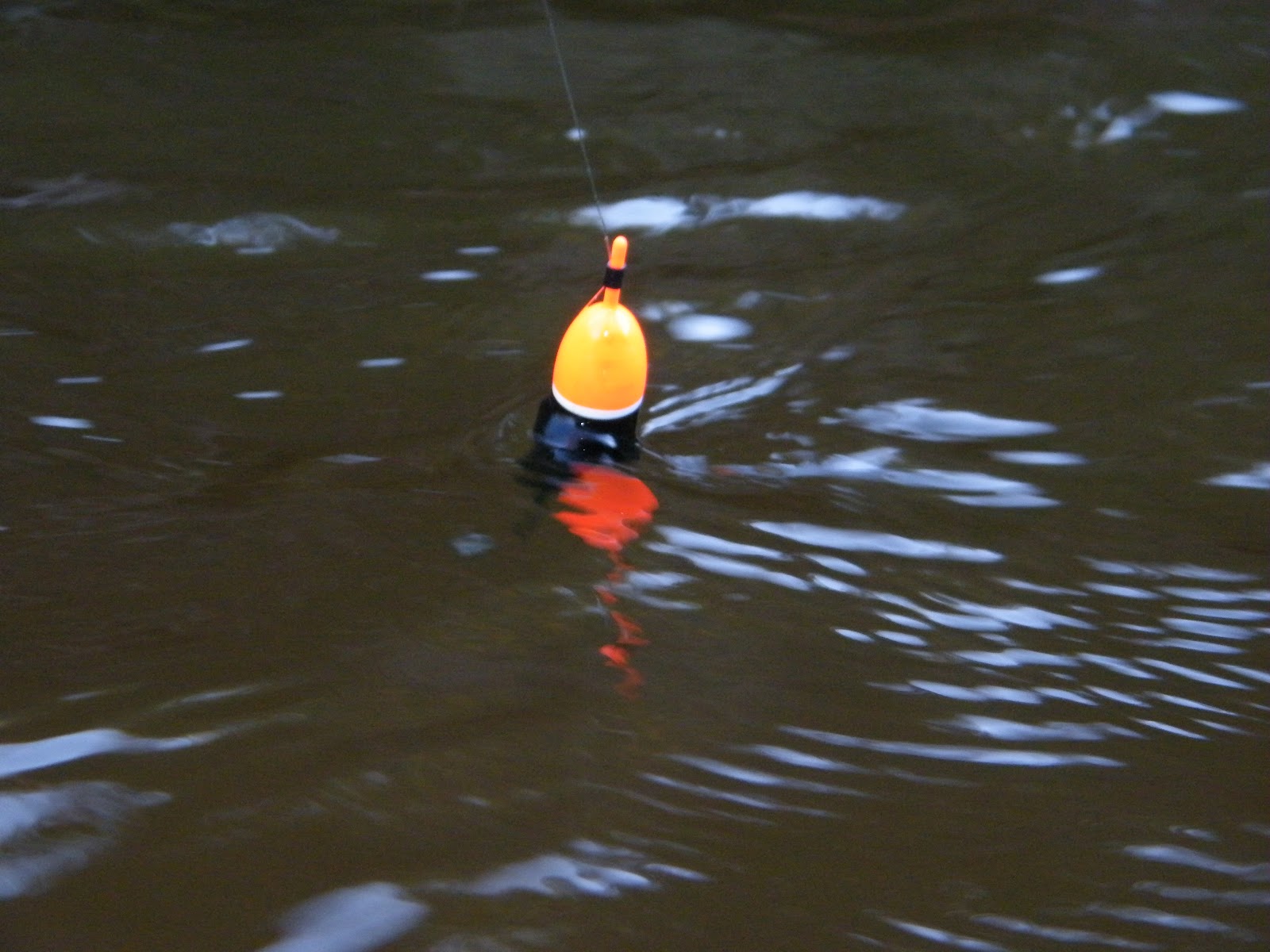
Start out shallow and slide everything up after a few drifts. This avoids drudging bottom and the possibility of spooking fish. The thing about sensitive floats is they will let you know where you are in the water column. If the float points downstream you are drudging bottom. If the float points upstream you are either set too shallow or you need more weight to match the current. What you want to see is the float straight up and down and submerged to the point that only the top is visible. This lets you know that everything is set up properly and you’re on your way to a feisty steelhead.

Hydrology tells us that the current in a river is actually faster on the surface than on the bottom. It doesn't take long for the steelhead to notice when something floating by them is awry. To slow the float down, we use a technique called "trotting" or pulling back on the float slightly during your drift. This allows you to slow the float to the same speed as the current on the bottom. 


   Presentation selection can vary. It can include such things as yarn tied to mimic a fish egg, stone and hex fly imitations, pink plastic worms, night crawlers, butter worms, wax worms and spawn. I've also had success with a local fly pattern known as a Lake Superior X-Leg. These are tied by a local company called Jeff's Jigs and are available online.


Get out and chase some of the hardest fighting, most beautiful fish that Minnesota has to offer. Please remember to handle these wild fish with care.

Garett Svir
Photography by Kim Svir

Saturday, April 14, 2012

River Mouth Fishing for Great Lakes Trout and Salmon


Snap-loc sinkers from Water Gremlin are a great choice for plunking spawn or night crawlers for Great Lakes trout and salmon. This allows you to float bait slightly off bottom. When a fish hits they don't feel any resistance because the line slides freely through the sinker.


Run your line through the sinker and through a small colored bead. Tie on a high quality barrel swivel. Tie on a leader of 16-25" of 6 pound fluorocarbon. When using crawlers inject them with a shot of air from a worm blower. If using spawn add a small marshmallow or piece of styrofoam to float eggs off bottom. Place your rod into a holder and watch for bites. Bites can range from the rod doubling over, to something as subtle as the line going slack. Cast this rig out where river current runs into the lake.


This technique can pay big dividends when fish are staging and preparing to make their spawning migration but low water and unfavorable conditions dictate that they wait.


Garett Svir
Slab Seeker Fishing


Snap-Loc Dipsey