Fresh from the Slab Seeker production studio: How to make your sinkers snag proof

Slab Seeker Fishing - Guide Service, Freelance Writing & Product Promotion: Contact Garett Svir 320-428-5174 or garettsvir@gmail.com
Popular Posts
-
 Well the secrets are out! I've been working on some diagrams for the Water Gremlin Sinkerizer. These are the rigging methods that we com...
Wednesday, June 27, 2012

Saturday, June 23, 2012
Halibut Sandwiches

Flour
Sea Salt
Ground Pepper
1/2 green pepper
1/2 red pepper
1/2 onion
Pepper jack cheese
Mayo
Ciabatta buns
Slice halibut into 4 pieces making each piece no more than 1/2" thick. Cover halibut pieces with flour, salt and pepper. Place in hot pan with olive oil. In the meantime, simmer peppers and onion in a pan over med/low heat with a drop of olive oil to prevent from sticking. Cook the halibut until both sides are golden brown flipping twice. Place pepper jack cheese on halibut. Toast and Mayo buns and serve!
Beverage of Choice: Nordeast Grain Belt
Tuesday, June 19, 2012
Planning your Dream Alaskan Vacation
If you’re like most fishermen and
women, you’ve probably always dreamed about taking a fishing trip to Alaska .
You imagine yourself wading through the clear mountain streams chasing rainbows
or taking a charter trip to catch giant barn door sized halibut. Maybe you
would prefer casting into giant schools of bright red sockeye salmon or
floating a river in pursuit of the next world record king salmon. Originally I
assumed a trip like this would involve a remote location that was a huge
investment in time, and well, let’s not forget about money. However I found an
Alaskan vacation was easier than I ever imagined. You can actually do all of
these things with a flight to Anchorage
and a 52 mile drive to Alaska ’s Kenai
Peninsula .

In the heart of Alaska ’s
Kenai Peninsula lies the famed Kenai
River Kenai
River Kenai
River Alaska because
it is easily accessible to any angler wearing waders. The rainbow trout of the Kenai
River

The Russian
River Cooper
Landing and is one of the first towns you will
encounter on your pilgrimage. The stretch from the Kenai and Russian
River Russian
River

The area downstream from the Russian
River Skilak
Lake Skilak
Lake

A short drive will take you to the
town of Soldotna which offers
restaurants, laundry facilities, tackle shops and all the other conveniences of
the lower 48. The city also offers many areas to access the middle Kenai
River

The coastal
towns of Seward and Homer are the most popular ports for halibut charters. Some
charters will also offer multi species trips which include ling cod, rockfish
and salt water salmon. On your voyage out to the halibut grounds you will pass
glaciers, see bald eagles and may catch a glimpse of sea otters, puffins and even
whales.


Hopefully you will decide that your
dream Alaskan vacation is more achievable than you ever imagined. I can smell
the halibut fillets on the grill already!
 |
| Map Courtesy of: Kenai Peninsula Bed and Breakfast Association: http://www.kenaipeninsulabba.com |
By: Garett Svir
Photography By: Kim Svir
Sunday, June 3, 2012
Split Shot Patterns for Steelhead
Well the secrets are out! I've been working on some diagrams for the Water Gremlin Sinkerizer. These are the rigging methods that we commonly use while float fishing for Great Lakes Steelhead. They can be employed anytime you're river fishing, no matter what species you pursue. The important thing to keep in mind is that steelhead are on the bottom so keeping bottom contact is essential. Don't be afraid to experiment with different sizes and amounts of split shot. It is also sometimes necessary to pull back slightly on the float during your drift, a practice known as "trotting". This is not a complete list of split shot patterns, but should get you started in the great sport of float fishing!

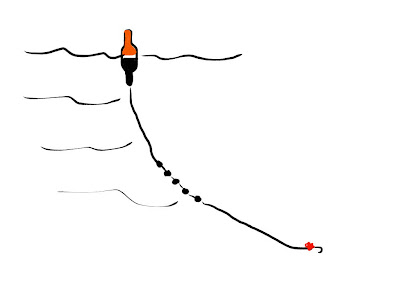

Diagram #1 Bottom Bouncing 2 Fly Rig
This is my high water blow out conditions method. It allows you to bottom bounce and use your float as a strike indicator to signal strikes. The rig starts out by placing your float onto the main line. We then attach a high quality barrel swivel. We then attach 3' of line and a split ring. From the split ring we run 4" of line out to a fly. We then attach 9" of line to another small split ring. From there we run another 4" to a second fly (where legal). We then run another piece of line down 12" to a Water Gremlin Snap-Loc Dipsey Sinker. I like to bring a few different sizes of Dipsey Sinkers to experiment with and make sure I'm keeping good bottom contact. Following these lengths will allow you to cast this rig without tangling your line. To adjust your depth simply slide the float up on your main line. This is high water steelheading at its finest and will allow you to fish when others are stuck at home on the couch!
Diagram #2 Stacked Shot
I like to use this shot pattern when fishing heavy current like the head of a hole. This rig will punch through the heavy surface current and get you down to the fish quick. Start out with a Raven FM float and attach a high quality barrel swivel. Add a leader of 3-5" feet depending on the depth of the hole. Go down half the distance to your hook and stack 3-5 size 3/0 Water Gremlin split shot. Hang on tight a chromer is in your near future!

Diagram #3 Shirt Button Shot Pattern
This pattern is for the deep tail outs and holes with moderate current. It starts out by adding 4 BB Water Gremlin Split Shot under the float. An even distance away I place 3 BB's. An even distance away I place 2 BB's, and eventually taper down to one. This rig is designed to keep your bait out ahead of your float and in the strike zone. This is the most popular pattern for float fishing steelhead and is highly effective under many conditions.


Friday, May 18, 2012
Spring Sunfish

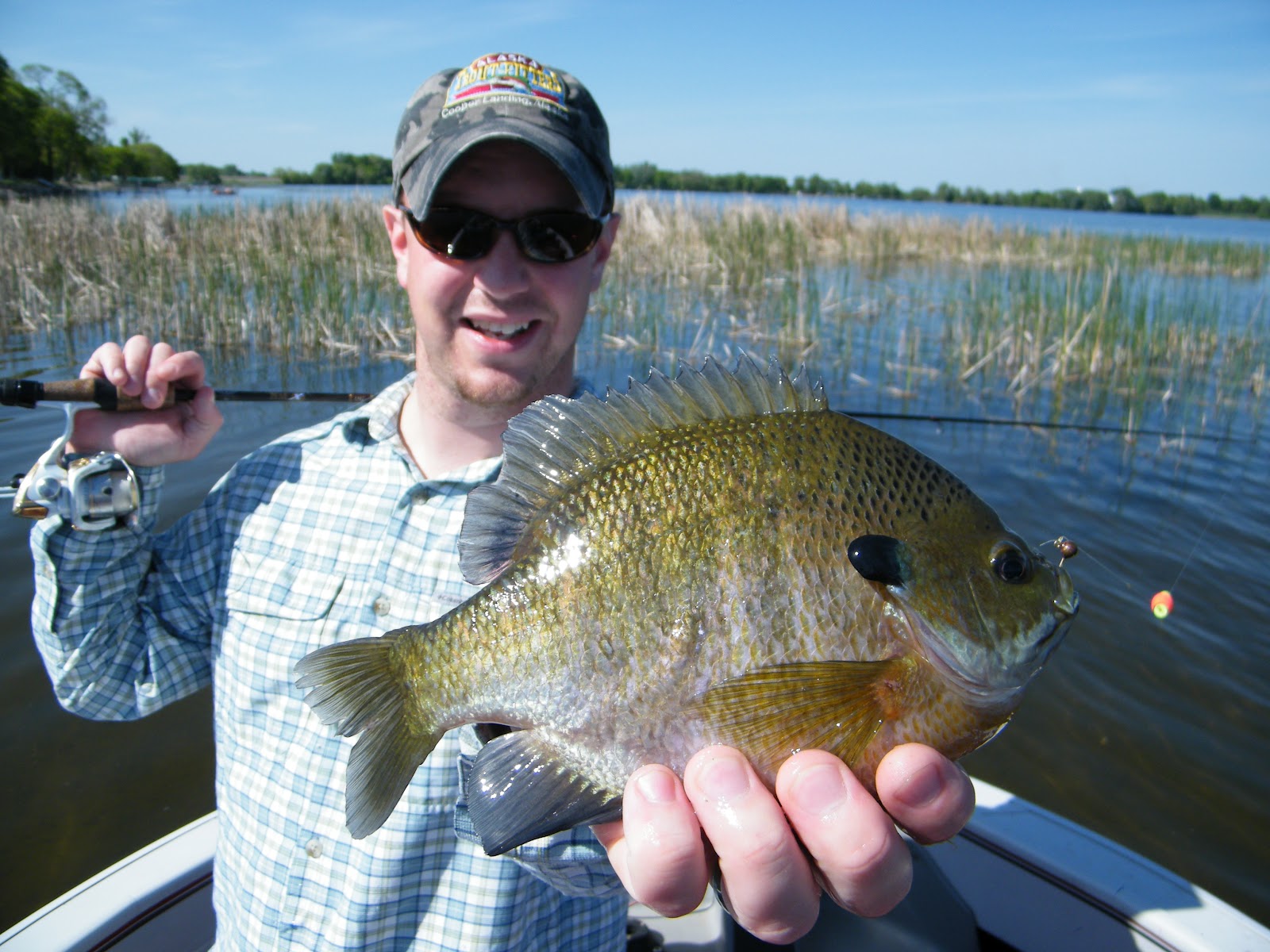


Great day on the water fishing bluegills! Caught one 10 1/2 inches, most 8-9 inches. Huge fish, awesome photos, great company!
All images are property of Slab Seeker Fishing.
If you are interested in stock images of fishing related content, please contact me at slabseekerfishing@hotmail.com
Kim
Monday, May 14, 2012
Fishing Minnesota Trout Lakes
Fishing Minnesota Trout Lakes

June, in Minnesota ,
is a great time of year to be a fishing enthusiast. In the land of 10,000 lakes
we are fortunate enough to have approximately 180 of these lakes managed for stream
trout. The stream trout lakes in Minnesota
are stocked by the Department of Natural Resources with rainbow trout, brook
trout, brown trout and a hybrid of brook and lake trout called splake. The DNR
stocks approximately 400,000 rainbow trout, 150,000 splake, 90,000 brook trout
and 20,000 brown trout. While a majority of these lakes lie in the northern
most part of the state in Lake and Cook counties, trout fishing opportunities
lie as far south as Rochester. Not only do these fish raise havoc on light
tackle they also make for great table fare.
Growing up
in the Arrowhead Region a majority of our June consisted of fishing the remote
trout lakes of northern Minnesota .
Many of these lakes you would later lie to your mother about in fear she may
name drop at the office water cooler. In the world of inland trout fishing a
17” fish is respected, an 18” fish is coveted, and fish over 20” most people
are lying about.

The remote nature of many trout
lakes makes fishing from shore or in a canoe great options. A productive method
for shore bound anglers is to inflate night crawlers full of air with sliding
½ ounce Water Gremlin egg sinkers. Slip bobber fishing, casting small spoons,
spinners and stick baits all produce results. It pays to be versatile and
experiment with presentations. I’ll often bring several rods rigged for
different fishing methods. Prolific bug hatches also make the fly rod a viable
option on certain evenings. Pay attention to the size and color of bugs that
are hatching and try to match the hatch.
Larger lakes will typically have
boat ramps and allow for more conveniences to aid in your search. Early in the
season fish will be located high in the water column and around shoreline
structure. I typically start out trolling spoons or small stick baits. Make
sure to let out plenty of line to get lures away from the noise of the motor. These
fish have an aggressive nature so don’t be afraid to go fast, even reaching
speeds of 2.5 mph. This is a search technique and will help you eliminate
unproductive water. Another highly effective technique is to troll a small
cowbell rig. Cowbells are a set of spinner blades attached onto a piece of
cable. I run a 2’ leader off the cowbells to a #6 hook baited with a half night
crawler. I like to pinch my night crawlers in half to leave a big scent trail
in the water. The rig produces a lot of flash and vibration. It is meant to
mimic a school of bait fish with the added scent of a crawler to seal the deal.
These can be fished off a downrigger, or simply weighted down with a Water
Gremlin Rubbercor sinker.
Keep an eye on the depth finder for suspended
fish. Once I connect or locate fish on the electronics, I’ll often stop and
finesse fish. For this I like to use night crawlers or dough baits like Pautzke’s
Fire Bait, fished on slip bobbers. Pautzke’s Fire Bait caters to the instincts
of fish that grew up on hatchery pellets consisting of similar ingredients.

As summer progresses the fish will
move away from shoreline structure and suspend near the thermocline. This is
the layer of water with the greatest temperature change. This layer contains food,
adequate oxygen and the preferred temperature of these cold water fish. The
thermocline will actually show up on your depth finder as a broken line with
heavy shading below it. You will also notice a lot of fish located at this
level. This is the time of year when a downrigger really shines. It allows you
to fish fast and search out fish at a consistent depth just above this layer of
water. Clamp on downriggers can be purchased for a minimal investment and can
aid in searching out trout.
A complete list of stocked stream
trout lakes is available on the Minnesota Department of Natural Resources
Website at: dnr.state.mn.us. It
has been said that trout fishing takes you to some of the most beautiful
unspoiled places around. I assure you that the remote trout lakes of Northern
Minnesota will not disappoint.


Friday, May 11, 2012
Casting River Mouths for Lake Trout and Steelhead
It's getting to be that time of year when I'm seeing fewer and fewer steelhead everyday on Lake Superior's North Shore Tributaries. The days are getting longer and people's attention are turning to warm water species, bbq's and lawn care. Some savy anglers however, are going back to where they began the steelhead season, and fishing river mouths.

Gord Ellis recommends jerkbaits like Rapala X-Raps and Husky Jerks in sizes #10 and #12. His favorite colors are clown and silver. He likes the fact that you can work these baits slowly and not get hung up. I've had success with Krocodile spoons from Luhr Jensen in hammered brass/ fire. I replace the treble hook with a 1/0 VMC siwash hook to make it more snag resistant.


According to trout and salmon guru Gord Ellis, lakers show up when the water pushes 50 degrees. Coaster brook trout as well. I'll add drop back steelhead to the list. Like many other species in post spawn mode, steelhead will drop back out into Lake Superior and gorge themselves on available forage to recover from the spawning cycle. This period can be a short window but can still provide for some angling excitement.

Sometimes you've got to go natural and lakers (much like the author) can't resist a smelt fry. A Water Gremlin Snap Loc Dipsey Swivel Sinker, fished with a 25" leader and a dead smelt is going to produce fish. I simply inject the smelt with a shot of air from my worm blower to float slightly off the bottom. Floating a spawn bag off the bottom will also yield results.
Another secret bait according to Ellis is the bucktail jig. He has the most luck with black, fished with no meat attached. I might have to see if I can get the crew over at Jeff's Jigs to make me some lake trout specials.
It's not over till it's over. Get out and chase some last chance steel faces, lake trout and if your lucky a coaster brook trout. Trust me when I say it's going to be a long time till fall!

Another secret bait according to Ellis is the bucktail jig. He has the most luck with black, fished with no meat attached. I might have to see if I can get the crew over at Jeff's Jigs to make me some lake trout specials.
It's not over till it's over. Get out and chase some last chance steel faces, lake trout and if your lucky a coaster brook trout. Trust me when I say it's going to be a long time till fall!

Garett Svir
Slab Seeker Fishing
Subscribe to:
Posts (Atom)